
Recognize Worth County Deed Records by Instrument
The Worth County Clerk of Superior Court records warranty deeds, quitclaim deeds, security deeds, assignments, rights-of-way, easements, and plats. The label matters, because not every filing conveys ownership.
| Deed Type | What It Does | Common Use |
|---|---|---|
| Warranty deed | Conveys the stated interest with warranties in its text | Ordinary arm's-length transfer |
| Quitclaim deed | Conveys whatever interest the grantor has, if any | Name, family-interest, or title cleanup |
| Security deed | Secures a debt under Georgia recording practice | Loan and lien research, not a sale deed |
| Executor or administrator deed | Conveys through an authorized estate representative | Probate-related transfer |
| Deed under power or tax deed | Records a sale under a stated statutory process | Foreclosure or delinquent-tax trail |
A security deed, lien, or easement can burden a tract without naming any new owner of record in Worth County. Read the granting clause before deciding what changed.
Use the Worth Clerk and GSCCCA Index Together
The GSCCCA search menu offers Real Estate Name, Book/Page, Plat, Lien, PT-61, UCC, and other modes. Some searches cost money. Detailed results and images can require an account or payment, and no official source publishes the earliest online year for the Worth deed index, so treat any cutoff with care.
| Index route | Start with | Result to retain |
|---|---|---|
| Real Estate Name | Grantor or grantee | Party, type, date, document reference |
| Book/Page | Recorded citation | Matching instrument and image status |
| Plat | Name or book/page | Subdivision, lot, block, revision |
| PT-61 | Name, document, address, or map mode | Transfer context, not a deed substitute |
The GSCCCA portal keeps these record families separate.
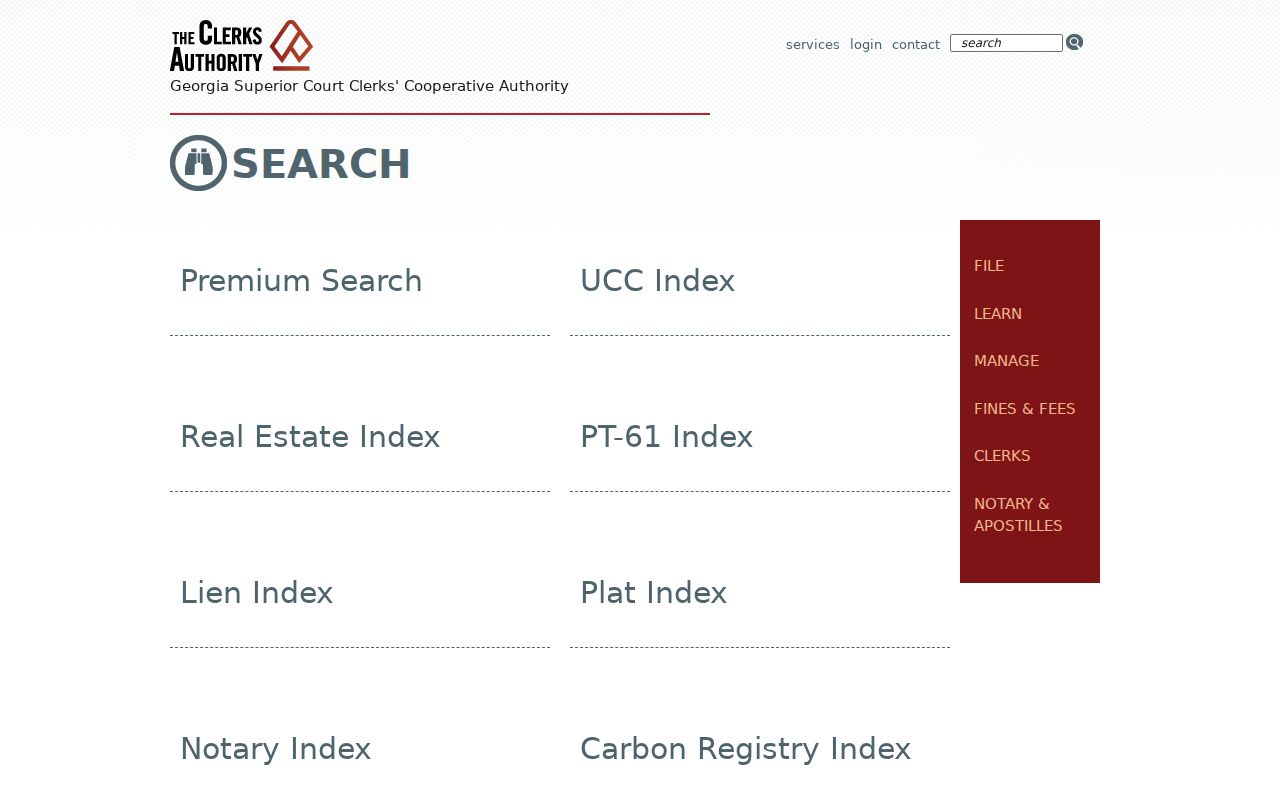
Match each instrument to the right index, and confirm Worth County on every hit.
Read Georgia Security-Deed Language Correctly
In Georgia, search "security deed" rather than "mortgage." Lenders change, so follow the assignments separately. A debt stays visible in Worth County deed records. It remains there until a release or cancellation is recorded. "Consideration" may be nominal. It need not equal market price. PT-61 sale data helps, though family, exempt, multi-parcel, or non-market transfers can skew a simple price reading.
Walk Worth's Grantor-Grantee Index in Both Directions
A grantor gives up an interest. A grantee receives it. Searching both roles is how the recorded chain connects in Worth County, especially when a name changes through an estate, trust, corporate merger, or correction.
- Find the current grantee's deed and verify it by parcel description, not name alone.
- Read the grantor and any prior-instrument citation from that image.
- Search the grantor as an earlier grantee, testing estate, trust, initials, and entity-name variants.
- Repeat while preserving execution date, recording date, type, book/page, and unresolved gaps.
- Grantor
- The party conveying the stated interest.
- Grantee
- The party receiving that interest.
- Chain of title
- The ordered series of instruments affecting one tract.
- Book/page
- A recorded-document locator that may bridge an older notice to its image.
Bridge a Worth Notice to Book 328, Page 20
A 1999 Worth County foreclosure notice pairs Civil Action 99-CV117 with a security deed at Book 328, page 20. That pairing shows the method. Inspect the publication itself, then carry the book and page into the land index. Use the action number for the court file.
Neither record replaces the other. The case explains the dispute and the process, while the recorded deed, cancellation, deed under power, or later conveyance shows what actually entered the land records. Together they tell one story.
Note: Inspect the newspaper image itself, because OCR can alter names, court numbers, and deed citations.
Connect Worth Deeds with Plats and Easements
The Clerk also records plats, easements, and rights-of-way. For a subdivision tract in Worth County, match the plat book and page, subdivision name, lot, block, unit, and any correction. For rural land, keep the land lot, district, acreage, roads, streams, and metes-and-bounds calls.
A plat draws the corridor. The easement does the legal work. It supplies the grant, width, purpose, maintenance terms, and termination rules, so search later releases, relocations, road dedications, and corrected plats before treating the first image as current.
Carry Worth Deed Records Beyond the Online Gap
Worth County was created from Dooly and Irwin Counties in 1853. Earlier deeds may sit under a parent county. The Sylvester courthouse burned in 1982. Any chain break near that year calls for questions about recreated, relocated, or microfilmed volumes.
Repository leads help here. The Georgia Archives Worth County microfilm card lists holdings, and archives guidance sends pre-1900 research through free FamilySearch access by place, then Land and Property. Some books are browse-only. Manual index work follows, and the local newspaper archive spans 1885 through 2013, while Georgia Historic Newspapers extends issue coverage through 2024.
No verified online cutoff. Official sources did not state Worth's earliest online deed year; move to books and microfilm when the digital chain stops.
Obtain a Worth County Deed Copy
Pull an online image when one exists. Otherwise, visit the Clerk at 201 N Main Street, Room 30, in Sylvester. A strong request names the record type and the parties. It also lists the approximate recording date, book/page or instrument number, legal description, and parcel or address. For remote certified copies, the county points to eCertification.
The workflow is stepwise. Register, then open a new request. Choose Worth County and the document type, and complete the required details. Wait for "Awaiting Payment Final Authorization" and pay. An email authentication link delivers the copy. Fees and processing times are unpublished, so ask for a current estimate.
Recorded, not guaranteed. Worth deed records show indexed filings, not a title opinion; unrecorded, invalid, corrective, or non-fee interests may require professional review.
The courthouse counter and eCertification are separate doors. An uncertified image often serves preliminary research, while a certified copy carries authentication for a formal use. Ask which one you need. Then keep the request number, payment status, delivery date, and authentication link with your notes.
Georgia Attorney General Opinion 2012-5 treats GSCCCA deed, lien, and plat indexes and images as public records under statutory fee authority. Public does not mean free. It does not mean instant, either. When an online Worth County record is gated, use clerk inspection or a copy request and ask for a current estimate.
Audit Each Worth Deed Link Before Moving Back
Log every field before you move backward through the deed records. For each instrument, note the grantor, the grantee, and their stated capacities. Also record the document type, the execution date, and the recording date. Add the book and page or document number, the consideration or PT-61 reference, and the legal description. Include the map or parcel reference, the prior citation, and any plat attachment. Note whether an image exists. That inventory blocks a security deed, a release, or an unrelated same-name filing. It keeps each one from slipping into the ownership chain.
A solid Worth County parcel match rests on two or more independent details. Name plus acreage works. So do parcel plus situs address, or legal description plus plat. Those pairings separate a true match from a different owner of record. The wrong match may simply share a name. When only the name lines up, treat the result as a lead and nothing more.
Set limits on negative findings too. Say that no release or deed appeared in the named index through your search date. Do not claim that no instrument exists. Online coverage, spelling variants, and indexing gaps can all hide a recorded deed.
Use Georgia Open Records for Missing Worth Instruments
Sometimes an index simply does not show a record that should exist. A focused Georgia Open Records Act request can then identify the document, the date range, the parties, the parcel, and the format you want. State guidance asks agencies to respond within three business days when possible. Reasonable search and copy costs may apply after the first quarter hour. An agency is not required to build a new report, so ask for an existing entry, image, plat, or electronic file. Request a cost estimate up front. Keep any cited exemption or explanation of delay in your file.
Assemble a Worth Deed-Record Packet
A complete packet keeps each piece of the deed search together. Hold the index result, the instrument image, the parcel match, and the related references in one place. Label every file with Worth County and the index searched. Add the party role, the instrument type, the execution date, and the recording date. Finish with the book and page or document number. Save the legal description separately so later deeds can be compared line by line.
Include a plat whenever the deed cites one. Keep any correction beside the instrument it changes. A security-deed packet should hold later assignments and releases. An easement packet should preserve the route, width, and purpose. It should also record the maintenance terms, the benefitted tracts, and the burdened tracts. These filings explain an interest without turning every index entry into an ownership transfer.
Land often changed shape before it reached the deed records you hold. When a split, combination, replat, road action, or annexation altered the tract, record both the former and current identifiers. The modern assessor number is just a search aid. The land lot, district, acreage, subdivision, and lot hold the legal trail back through time. So do the block, roads, water, and adjoining tracts.
Cite exactly what you reviewed. An index row reports a filing. A scan supports the instrument text. A certified copy adds authentication. Keeping those levels distinct stops a preliminary hit from being mistaken for the deed itself.
Before closing the search, cross-check the deed's parcel description against qPublic. A street address, map number, or acreage may differ from the recorded deed. When it does, record the conflict and ask the right custodian. The assessor can explain a tax-parcel identifier. The Clerk can explain an index entry or a recorded image. Neither office should be pushed toward a title opinion. When the issue turns on boundary location, priority, validity, or the legal effect of an easement, a surveyor or a Georgia real-estate attorney is the better call.